





When choosing an SCRM for multilingual WhatsApp customer management, the core is not to compare translation buttons or the number of languages, but to examine the four-layer chain of account aggregation, verifiable translation, customer data write-back, and team internal controls, and then use real conversations for implementation validation. If a team’s multilingual communication is still scattered across personal phones, personal translation tools, and Excel spreadsheets, first assess the team aggregation and customer management chain, and then decide whether an SCRM is needed; this is more effective than continuing to add translation tools. If you are still distinguishing between personal translation tools and team customer communication tools, you can refer toto compare with your own scenario.Multi-Account and Customer Communication Practices Before Selecting WhatsApp Chat Translation Software
Three signs that you need an SCRM, not a translation tool:
- Customer service agents need to switch frequently between multiple WhatsApp accounts, with message notifications scattered across different devices or windows.
- Translation results stay only in the chat window and are not captured in customer records, so the next follow-up requires translating historical messages all over again.
- During shift handovers, the customer service agent taking over needs to ask again about the customer’s language, needs, and conclusions from the last conversation, and cannot directly continue the dialogue.
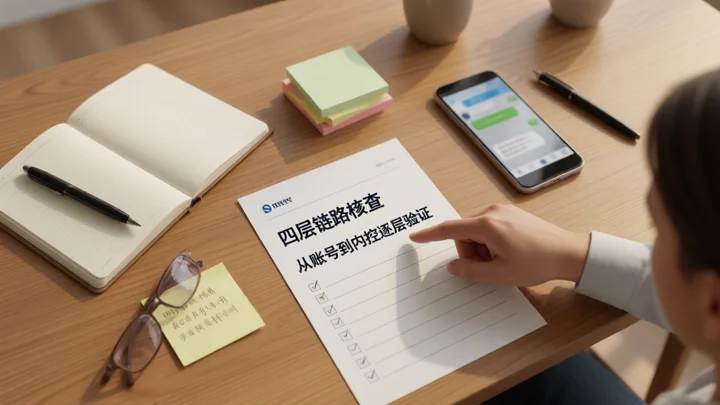
Four-layer chain verification: accounts, translation, customer information, and team internal controls
When selecting a solution, do not start by counting how many languages are supported; instead, check it layer by layer along the four-layer chain. Ask one key question at each layer and compare the answers with failure signals. This quickly rules out options that 'look feature-rich but cannot support team collaboration.' For more complete evaluation dimensions and methods for recording trials, refer toKey evaluation points for WhatsApp multilingual communication solutions.
| Chain layer | Key question | Failure signals |
|---|---|---|
| Account aggregation | Can multiple WhatsApp accounts receive and reply centrally within the same tool? | Still requires frequent switching between phones or browser windows, and message notifications cannot be unified. |
| Translation can be checked | Can customer service agents quickly check and correct translation results within the conversation? | Only the entire passage can be copied to an external tool for translation; once translated, it cannot be written back to the original conversation. |
| Customer information | Can customer ID, tags, and historical communications be retained with the conversation and made available for the team to view? | Customer data exists only in individual memory or spreadsheets, so continuity breaks as soon as the person changes. |
| Team internal controls | Are there controllable scopes for customer data permissions, sensitive words, and operation records? | All customer service agents can see all data, making it impossible to trace when someone leaves or hands over. |
Hands-on translation capability testing: validate with real conversation samples rather than counting languages
Many product pages list the number of supported languages, but this offers limited help for team communication. What really needs to be validated is whether, after translation, a customer service agent can quickly determine the meaning of a foreign-language message containing product terminology, model numbers, or addresses and organize a reply. It is recommended to prepare four types of real conversation samples for testing: text-only price inquiries, product confirmations with images, voice messages, and complaints mixed with abbreviations and industry terminology. During testing, observe whether two-way translation is smooth, whether the translation can be checked within the conversation, and whether there is a clear fallback method when issues occur.
SKY SCRM's business profile shows that it provides aggregated translation and customer management, supporting multilingual communication, AI translation, and customer management capabilities. During testing, you can pay attention to differences in how the same terminology is translated under different translation settings, but note that available capabilities, translation quotas, and feature permissions are subject to the actual plan, version, and current descriptions on the official website. Translation entitlements from one version cannot be applied to other versions, nor should you expect all languages to be completely accurate in all scenarios.
- Prepare samples:Select 10 to 15 items from real conversations over the past two weeks, covering text, images, voice, and passages with terminology, and note the expected translation.
- Test item by item:Complete bidirectional translation in the candidate tools, and record the number of mistranslated terms, omissions, and instances requiring manual correction.
- Check write-back:Confirm whether translated replies can be directly linked to the original conversation and customer record, rather than remaining in an external translation window.
- Switch settings:Try different translation settings on the same terminology passage, determine whether the differences are within an acceptable range, and record the switching cost.
- Exception fallback:Simulate when the translation service is unavailable or the quota is insufficient, and check whether the team has a clear manual handling method.
Multi-account aggregation and customer data write-back: determining whether shift handover is possible
Translation only solves “understanding”; shift handover determines whether the customer experience remains continuous. During selection, check whether multiple WhatsApp accounts can be handled centrally, whether the ownership of each conversation is clear, whether customer IDs and tags can be retained with the conversation, and whether historical communication is visible to team members. The business overview of SKY SCRM shows that it supports multi-account management across global social platforms, multilingual communication, AI translation, and customer management, and can be used for evaluation in this scenario; the specific platform compatibility and functional scope are subject to the current description on the official website. To learn how accounts, conversations, and customer information work together, you can read moreWhatsApp Multi-Account Translation Management Guide。
- Confirm whether customer service agents can see new messages from all accounts in a single interface and handle them by priority.
- Check the conversation ownership rules: whether the customer profile shows which account the customer came in through, who handled them, and which stage the follow-up has reached.
- Confirm whether protections are in place for data such as customer IDs and phone numbers, and whether different roles can view sensitive fields.
- Ask about the scope of the team's internal controls, for example, whether sensitive-word alerts and operation records can be enabled depending on the actual version.
How to run a two-week trial: an acceptance record for one customer journey
A feature demo can only show that something “exists”; a trial is what shows whether it “works.” We recommend choosing one real customer journey and running it end to end for two weeks: from the first foreign-language inquiry entering a WhatsApp account, through translated replies, tag logging, and a second follow-up, to the handover to another customer service agent. During the trial, require participating team members to record the number of mistranslations, missed follow-ups, and repeated inquiries every day, rather than writing only subjective impressions. For practical guidance on multilingual replies and follow-ups, seeHandling translation needs in WhatsApp customer communication.

- The first week: run real conversations.Have support agents handle new inquiries at their usual pace, while using prepared samples to supplement testing of translation settings, images, and voice messages.
- At the end of the first week: log issues.Compile mistranslations, missed replies, duplicate inquiries, and handoff blockers, noting at which layer of the chain they occur.
- Second week: Validate handoffs.Assign another support agent to take over the same batch of customers and observe whether customer profiles and communication history can support continuous replies.
- End of the second week: Review metrics.Compare pre- and post-trial mistranslation records, average follow-up counts, and handoff time to determine whether improvements come from the tool itself rather than temporary staffing.
- Purchasing decision:Only when all three layers—translation, multi-account aggregation, and customer profile write-back—can support daily operations should you move on to pricing and version comparison.
Version and cost boundaries: Get clarity on the number of accounts, translation quota, and permissions.
When comparing quotes, do not look only at the first-year price or a single plan name. Confirm the maximum number of accounts, translation character quota, available translation capabilities, customer profile permission scope, and configurable options for team internal controls, and ask clearly whether these entitlements are consistent across different versions. If the team has only two or three customer service agents but many accounts, prioritize confirming whether multi-account aggregation is included in the basic plan, to avoid a situation where it is available during the trial but restricted after launch. Before deployment, verify the actual usage environment and version requirements against the current instructions on the official website.
To learn more about how SKY SCRM brings multi-account aggregation, multilingual translation, and customer management into a single workflow, readSKY SCRM's guide to automatic WhatsApp message translation and multi-account customer management,then decide whether to try it based on the actual version.
Frequently asked questions
Do we need SCRM if we only have two or three customer service agents?
It depends on the number of accounts and how often handovers occur. If two or three agents share multiple WhatsApp accounts and need to cover shifts, and customer information and translation records cannot be carried over through individual memory, it is worth using SCRM to validate the workflow; if there is only one account and no handover is needed, you can address the translation issue first.
For translation capability, is a longer list of languages always better?
No. The number of languages is less important than translation quality for real terminology and the available quota. First compare translation results using samples of real terminology, then confirm the translation quota and feature permissions included in the plan, to avoid choosing a plan with a long language list but inaccurate translation in common scenarios or insufficient quota.
How many real conversations are meaningful to test during a trial?
We recommend preparing 10 to 15 conversations covering text, images, voice, and industry terminology, and having agents handle new inquiries at their normal pace over two weeks. The point is not a large sample, but one that can expose three types of issues: terminology mistranslation, interrupted write-back, and handover gaps.
How can you tell during a trial whether translation and customer management are truly integrated?
Check whether translated replies can be directly linked to the original conversation and customer record, whether the customer ID, tags, and communication history are retained with the conversation, and whether another agent can continue the conversation directly after a handover. If translation results still remain in an external window and customer information still relies on personal spreadsheets, the workflow is not truly connected.